Лучшие бесплатные VPN в 2026 году
Обзор the лучшие бесплатные VPNs в 2026 году. Сравнение Proton VPN, Windscribe, PrivadoVPN, hide.me, and TunnelBear for privacy, data limits, speed, and ease of use.
Сравнение бесплатные VPNs vs paid VPNs в 2026 году. Разберитесь the differences in speed, privacy, data limits, streaming, security, and device support.
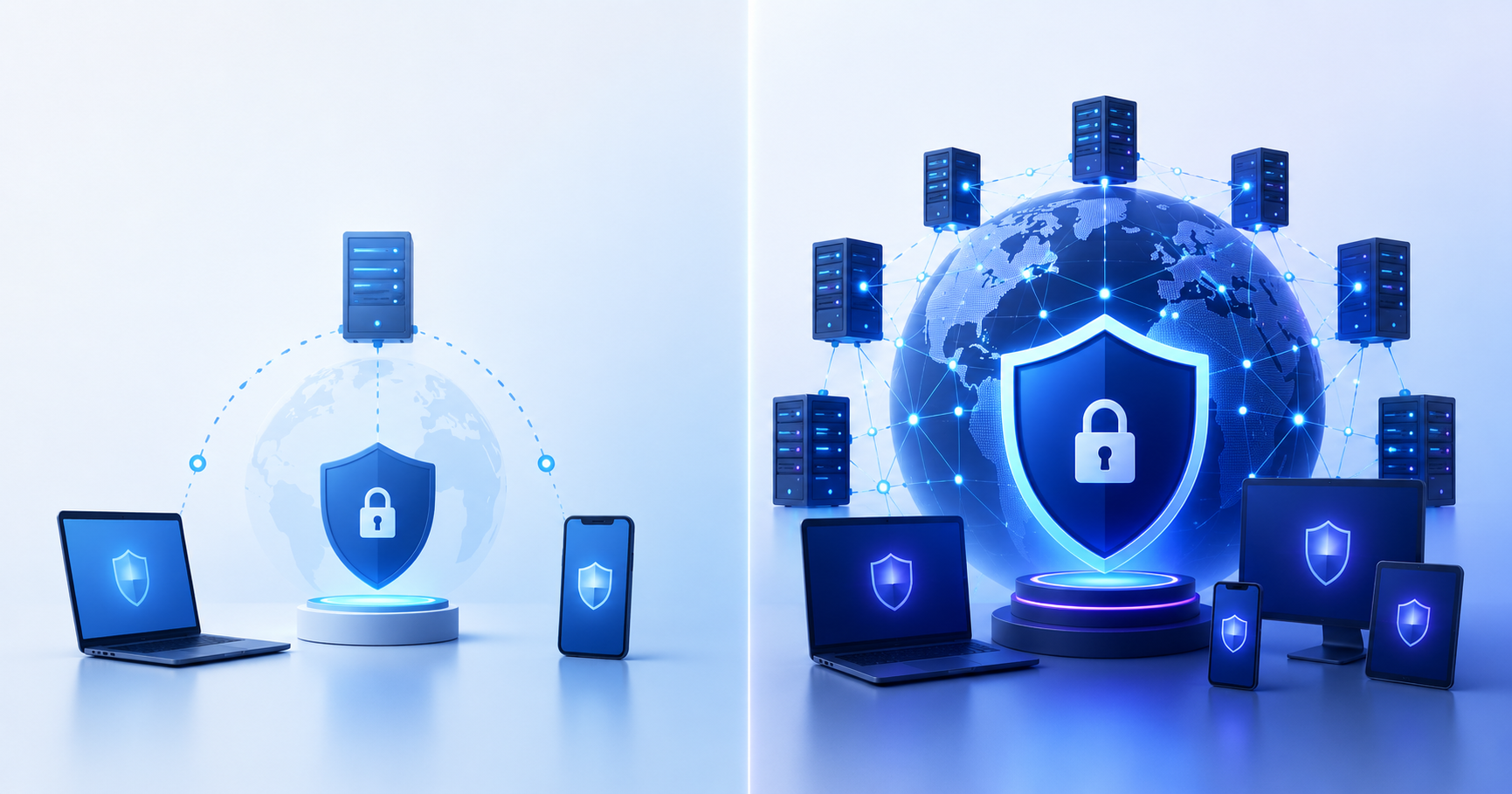
Compare Free VPN vs Paid VPN by workflow fit, limits, price, and long-term flexibility before choosing.
Free VPNs and paid VPNs serve the same basic purpose: they help protect your internet connection, hide your IP address, and make your browsing more private. But the experience can be very different.
A free VPN can be useful for basic browsing, testing VPN features, or protecting your connection on public Wi-Fi. A paid VPN usually offers better speed, more server locations, stronger streaming support, and fewer limits.
The best choice depends on how you plan to use the VPN. If you only need light protection from time to time, a free VPN may be enough. If you want to use a VPN every day, stream content, download files, or protect multiple devices, a paid VPN is usually a better option.
In this guide, we compare free VPNs vs paid VPNs in 2026 and explain which one makes more sense for different users.
A free VPN is a VPN service that you can use without paying for a subscription. Some free VPNs are completely free, while others are limited versions of premium VPN services.
Free VPNs usually come with restrictions. These can include limited data, fewer server locations, slower speeds, fewer devices, or limited access to advanced features.
The best free VPNs are usually offered by trusted companies that also sell paid plans. In this model, the free plan helps users test the service, while paid users support the business.
A free VPN can be useful, but it is important to choose carefully. Not every free VPN is safe or transparent.
A paid VPN is a premium VPN service that requires a subscription. Users usually pay monthly, yearly, or for a longer plan.
Paid VPNs normally offer more complete features than free VPNs. These can include faster servers, more countries, unlimited data, better privacy tools, streaming support, torrenting support, and apps for more devices.
A paid VPN is usually the better choice for people who use a VPN regularly or need reliable performance.
The main downside is cost. However, many VPN providers offer discounts, longer plans, free trials, or money-back guarantees.
Speed is one of the biggest differences between free and paid VPNs.
Free VPNs often have slower speeds because free users share limited server resources. Some providers also limit speed intentionally to encourage users to upgrade.
Paid VPNs usually provide better performance because they offer access to more servers and better infrastructure. This can make browsing, streaming, video calls, and downloads smoother.
If you only need a VPN for light browsing, a free VPN may be enough. But if you care about speed, a paid VPN is usually the better choice.
Many free VPNs have monthly data limits. Once you reach the limit, you may need to wait until the next month or upgrade to a paid plan.
This can be fine for occasional browsing, but it becomes a problem if you watch videos, download files, use social media often, or keep the VPN turned on all day.
Paid VPNs usually offer unlimited data. This makes them more practical for daily use.
If you want to use a VPN often, data limits are one of the main reasons to choose a paid VPN.
Free VPNs usually offer fewer server locations. You may only be able to connect to a small number of countries or automatic locations.
Paid VPNs normally provide many more server options. This can be useful if you want better speed, access to specific regions, or more flexible browsing.
More server locations also help reduce congestion. If one server is slow, you can switch to another.
For basic privacy, a limited number of locations may be enough. For flexibility, paid VPNs are better.
Privacy is the main reason many people use VPNs, so trust matters.
A good VPN should have a clear privacy policy and should explain what data it collects. The safest VPN providers are transparent about their business model and privacy practices.
Some free VPNs are safe, especially those from reputable companies. However, unknown free VPN apps can be risky. Some may show ads, track user behavior, collect more data than expected, or use unclear monetization methods.
Paid VPNs are not automatically perfect, but they usually have a clearer business model: users pay for the service.
When choosing any VPN, free or paid, check the privacy policy, company reputation, and app permissions.
Streaming is one area where paid VPNs usually perform much better.
Free VPNs often struggle with streaming services because they have fewer servers, slower speeds, and more restrictions.
Paid VPNs are more likely to offer better streaming performance, although results can still vary depending on the service, server, and region.
If your main goal is streaming, a paid VPN is usually the more realistic choice.
If you only need basic privacy while browsing, streaming support may not matter.
Free VPNs are usually not ideal for torrenting or large downloads. Data limits, slower speeds, and server restrictions can make the experience frustrating.
Some free VPNs may not allow torrenting at all.
Paid VPNs usually provide better support for downloading and file sharing. They often include unlimited data, faster servers, and better privacy features.
If you download large files or need stronger protection for frequent VPN use, a paid VPN is usually the better option.
Free VPNs may limit how many devices you can use. Some free plans only allow one device or restrict access to certain platforms.
Paid VPNs usually support more devices and often include apps for Windows, macOS, iOS, Android, browsers, smart TVs, and routers.
If you only need VPN protection on one phone or laptop, a free VPN may be enough.
If you want to protect several devices, a paid VPN is usually more convenient.
Both free and paid VPNs can offer basic encryption and IP protection, but paid VPNs often include more advanced security features.
These may include:
Not every user needs all of these features. But if privacy and security are important for your work, travel, or daily browsing, a paid VPN gives you more control.
Some free VPNs show ads or push users to upgrade. This does not always mean the VPN is unsafe, but it can affect the user experience.
Paid VPNs usually do not show ads inside the app because users are already paying for the service.
A good free VPN should be clear about its limits without making the app annoying to use.
If a free VPN feels aggressive, confusing, or full of ads, it may be better to choose a different provider.
A free VPN can be enough if you only need basic protection.
Choose a free VPN if:
For light users, a trustworthy free VPN can be a practical choice.
A paid VPN is usually better if you need stronger performance and fewer limits.
Choose a paid VPN if:
For regular use, a paid VPN usually provides a smoother and more reliable experience.
There is no single answer for everyone.
A free VPN is better for users who want basic privacy without paying. It is good for testing, occasional browsing, and simple public Wi-Fi protection.
A paid VPN is better for users who want speed, reliability, streaming support, unlimited data, and stronger long-term protection.
If you are new to VPNs, you can start with a trusted free VPN. If you reach the limits quickly or need better performance, then upgrading to a paid VPN makes sense.
Free VPNs and paid VPNs both have a place. A free VPN can be useful for simple privacy needs, but it usually comes with limits. A paid VPN offers better speed, more locations, unlimited data, and stronger features.
The most important thing is not just whether the VPN is free or paid. The most important thing is whether the provider is trustworthy, transparent, and suitable for your needs.
For occasional use, a free VPN can be enough. For daily browsing, streaming, travel, work, or long-term privacy, a paid VPN is usually the better choice in 2026.
If you want to start without paying, read our guide to the best free VPNs in 2026.
If you prefer testing premium features first, check our guide to the best VPN free trials in 2026.
If you want premium protection at a lower price, read our guide to the best cheap VPNs in 2026.
You can also check our guide to VPN promo codes and discounts before buying.
Обзор the лучшие бесплатные VPNs в 2026 году. Сравнение Proton VPN, Windscribe, PrivadoVPN, hide.me, and TunnelBear for privacy, data limits, speed, and ease of use.
Сравнение the лучшие VPN бесплатные trials в 2026 году. Разберитесь how Surfshark, NordVPN, CyberGhost, ExpressVPN, and Proton VPN let users test VPN features risk-бесплатные.
Сравнение the лучшие cheap VPNs в 2026 году. Разберитесь how Surfshark, Private Internet Access, CyberGhost, NordVPN, and Proton VPN compare on price, privacy, speed, and features.